Hypertufa How To
A Quick Overview and Guide to craft making with hypertufa
Hypertufa How To; Supplies
Jacki Cammidge is a participant in the Amazon Services LLC
Associates Program, an affiliate advertising program designed to
provide a means for sites to earn advertising fees by advertising and
linking to amazon.com. Other links on this site may lead to other affiliates that I'm involved with, at no extra cost to you.
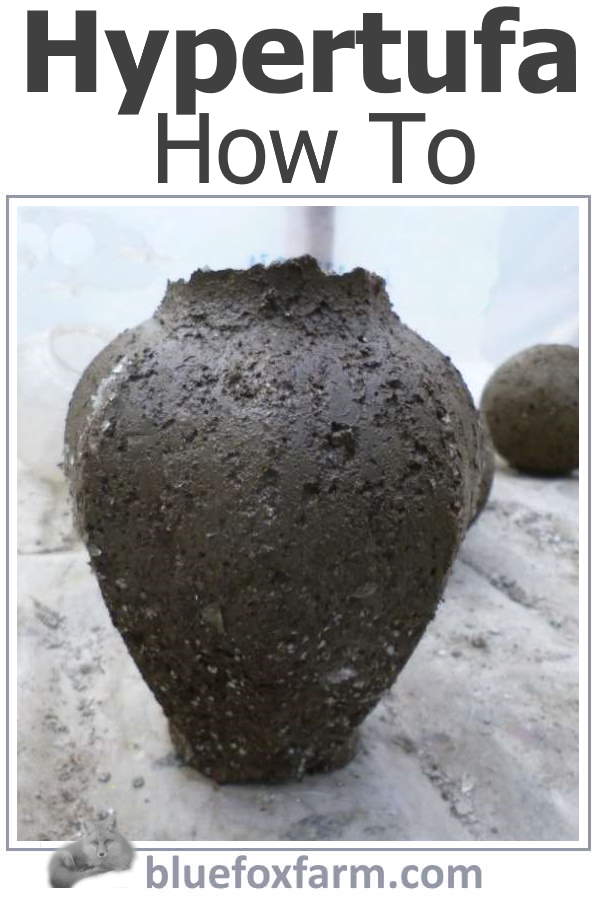
Starting your hypertufa journey you will need some supplies, such as rubber gloves, safety glasses, a large tub or wheelbarrow, watering can or jug, and a hoe or other mixing implement.
Ensure that you have somewhere to work that will be easy to clean up, as using any kind of concrete or cement product will be messy.
Old shower curtains or drop cloths will protect the floor of a garage or workshop. Also make sure you have somewhere to leave your garden art creations to cure without disturbing them, as this can make a larger item crack.
Hypertufa How To; Safety
Always wear rubber gloves and safety glasses when making hypertufa, especially when you’re making up the mix as sometimes it can splash up.
Due to the caustic nature of cement powder when mixed with water, you can get nasty burns on bare skin, and it’s especially damaging to eyes.
Even the dry powder can cause problems if the dust gets in your eyes, and can cause breathing problems if inhaled - use a respirator while handling the powder to prevent damaging your lungs.
Have an eye wash kit available, and ample water to rinse off hands in case of contact.
Once the pieces are dry, they no longer have this issue.
Hypertufa How To; Ingredients
Use one part by volume of each of these:
- Peat moss, screened to remove larger debris – sometimes called Sphagnum Peat Moss.
- Perlite – optional ingredient, but will make the finished project a little lighter in weight.
- Sand – builders sand, not beach sand which may contain salt.
- Cement powder – Portland cement – don't use mortar mix which has sand in it already, and will throw off the proportions.
Carefully add in small increments, mixing well between:
Water – straight out of the tap or rainwater.
Additionally, you can add a small amount of:
Hydrated lime – adds plasticity, the ability to hold its shape while being molded. This would be used when sculpting or making the hypertufa in a mold without much support as it will resist slipping off.
Sometimes, fibre mesh or fiberglass reinforcing strands are used to add strength.
Mix these together in the ratios listed, and keep track of any changes that you make as this can have an impact on the results.
If some of these ingredients aren't available nearby or online, there are substitutes that might work for you - give them some research.
Hypertufa How To; Molds
Many Hypertufarists use cardboard boxes one inside the other for a mold, using one that is about 5cm (2") smaller for the inside. They should be lined with plastic film to stop them from collapsing.
Other successful molds are plastic tubs, planters and bowls, lined with dry cleaning bags or sprayed with Pam to help in removing the hypertufa.
I’ve found that sometimes it takes a long time for the hypertufa to dry enough to remove, as the plastic tends to keep the moisture in.
However, it’s not a bad thing, as it will cure better with less drying, making it stronger in the end. It just means that your mold will be tied up with a project and you won’t be able to use it until the first one is out.
Sag pots, or sand molds work well for hypertufa.
Simply make a depression in a pile of loose sand, dampen it and make your hypertufa tray or bowl right in it. The sand will stick to the outside, which is fine for a rustic look, or you can line the depression with plastic film.
Ready to Take Your Hypertufa to the Next Level?
Learn what it takes to be creative - we all have the gene but how do we develop it? Get the free guide!
Fill in the form below for your copy;
(Don't be disappointed - use an email address that will accept the free download - some .aol email addresses won't.
If you don't see your download within a few minutes, try again with another email address - sorry for the bother.)




Popular Posts;





Woman of Many Sticks - find out why I'm called that...
Join my e-mail group;
Sign up for the Rurality Newsletter here: (click on the bucket!)
Blue Fox Farm Home | About Me | Contact Me | Site Map | Privacy Policy | Copyright
Copyright © 2002- BlueFoxFarm.com All rights reserved
