- Home
- Rustic Garden Water Features
- Hide Fountain Pump and Tubing
Jacki Cammidge is a Certified Horticulturist and rustic garden artisan with 30+ years creating twig trellises, archways, and hypertufa pieces from natural materials.
Hide Fountain Pump and Tubing
Keep The Ugly Parts Out of Sight
There's nothing sadder than a beautiful little fountain or water feature, with all the working parts in full view. If you can't hide all the pumps and tubing of a rustic water feature, it just defeats the purpose of it.
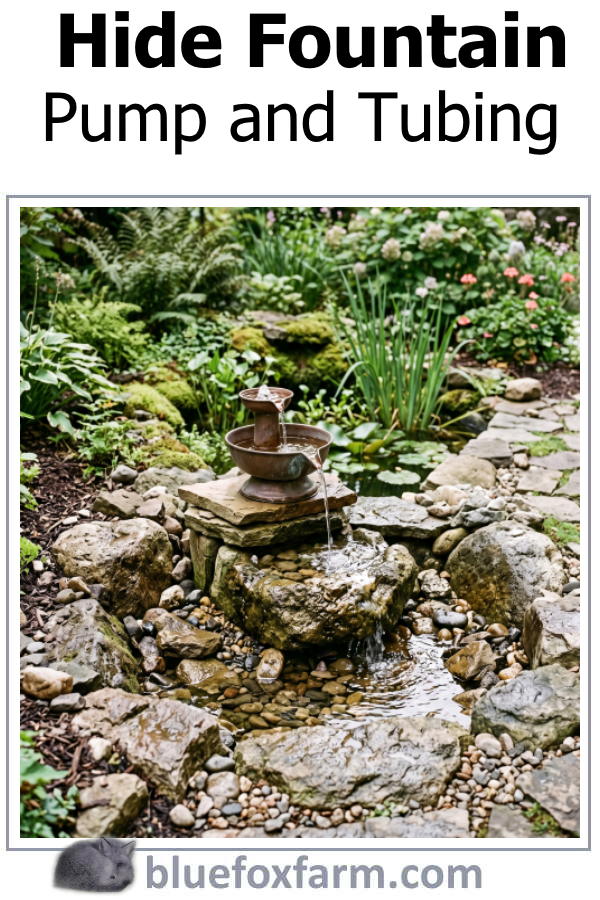
It also looks very amateurish, so take some pages out of the professional landscapers book with these tips on how to hide the fountain pump and it's necessary tubing.
How to Hide Your Fountain Pump and Tubing: Rustic Disguise Methods
A beautiful fountain can lose its charm the instant a visitor spots a coil of black tubing snaking out from under a rock or a plastic pump humming away in plain view.
The good news is that hiding these components isn't just possible - it can actually become part of your fountain's rustic character.
With the right materials and a little creativity, you can make the mechanics disappear so completely that your fountain looks like it's been bubbling up from the earth for a hundred years.
Start With Smart Placement
Before you disguise anything, think about where the pump and tubing will actually sit.
Submersible pumps should be placed in the lowest, most hidden part of your water feature - inside a hidden reservoir, beneath a false bottom, or tucked behind a large "hero" rock that becomes the visual focal point.
Route tubing along the most indirect path possible, hugging the inside curve of basins or running beneath structural stones, so there's less exposed length to conceal in the first place.
Solar pumps require a lot less tubing, as they are usually only one piece - the pump, and the solar collector. The only part you will see is the collector, a necessary evil as it has to be exposed to the sun to charge the battery.
River Rocks and Stacked Stone: The Classic Cover-Up
The single most popular rustic method is simply burying the pump and tubing under a bed of river rocks.
Because these smooth, naturally weathered stones are what people expect to see at the base of any water feature, they hide equipment while looking completely at home.
The key is to leave the pump enough clearance for water circulation and intake, so pile the rocks loosely around - not directly on top of - the intake screen.
For a stacked-rock waterfall or fountain, many DIYers place the pump inside a plastic tub or basin, run half-inch fountain hose up through gaps in stacked flagstones or boulders, and then camouflage the final few inches of visible tubing with smaller pebbles wedged into the cracks.
A metal grate or mesh screen positioned over the reservoir supports the weight of the rocks while keeping them from sinking into the pump itself.
Mesh Screens and Grates: The Hidden Support Layer
A simple trick that pays off well is using a mesh screen "food cover tent" or a section of expanded metal grate laid directly over the basin.
This creates a stable platform so that river rocks stacked on top don't shift or sink and expose the tubing beneath. Anchor the edges of the mesh with heavier stones so it doesn't float once water begins circulating.
Rustic Wood and Reclaimed Materials
For a farmhouse or vintage look, hollowed-out logs, old wooden barrels, galvanized wash tubs, and salvaged hand-pump bodies make excellent disguises.
A popular rustic project involves fitting a vintage-style hand water pump over a hidden reservoir: tubing runs invisibly up through the base and out through the pump's original spout, so water appears to be drawn by hand even though a modern submersible pump does all the work below.
Builders typically drill a hole through the wood base, thread the tubing through, connect it to an elbow fitting at the pump's spout, then hide both pump and tubing beneath a layer of river rock before filling the tub with water.
Old wheelbarrows, cast-iron kettles, ceramic crocks, and reclaimed farm
equipment work the same way - repurposed vessels double as both reservoir
and rustic decoration while completely swallowing the hardware.
Let Plants Do the Work of Disguising The Mess
Aquatic and marginal plants are a fountain-hider's best friend. Water lettuce, dwarf papyrus, creeping jenny, and ornamental grasses planted directly around the fountain's edge will droop and spread over exposed tubing within a single season.
Even a few strategically placed potted plants pulled close to the pump housing can eliminate the need for extensive rockwork. Combining plants with rocks is especially effective, since the plants soften any hard edges left by the stone.
The stems can also play their part by disguising the tubing, especially if they're darker in colour.
Bury the Reservoir Entirely for a "Disappearing" Effect
For pondless waterfalls and fountains, many people bury the entire reservoir below grade, cover it with a grate, and then spread river rock across the whole surface.
This "disappearing pond" style hides the pump completely below ground while the water seems to vanish into the rocks after cascading over the feature, only to be recirculated invisibly.
Tubing runs underground from the reservoir to the top of the waterfall structure, staying completely out of sight the entire way.
Camouflage the Final Stretch of Tubing
Even with rocks, mesh, and plants doing most of the heavy lifting, there's often a final few inches of tubing that peeks out near the top of a waterfall or fountain spout. This last bit is usually the hardest to hide because it needs to stay accessible for adjustments.
Rustic solutions include:
- Wrapping the tubing in twine, jute, or grapevine to mimic root or vine growth.
- Running it behind a piece of driftwood or bark-covered branch.
- Painting exposed sections with dark, matte, rock-colored spray paint
made for outdoor use so any visible inch blends into shadow.
- Threading it through a hollow branch or hollowed-out stone.
Don't Forget Maintenance Access
Whatever rustic disguise you choose, always leave yourself a discreet way to access the pump for cleaning and winterizing.
Many builders build
in a hidden "trap door" rock that lifts off easily, or leave one
section of the mesh grate unglued or un mortered so it can be removed without
disturbing the whole rock arrangement.
Final Thoughts on Disguising the Pump and Tubing
The best rustic disguises don't fight the fountain's natural materials - they extend them.
River rock, reclaimed wood, old metal vessels, and thick plantings all serve double duty: they hide your equipment while reinforcing the handmade, weathered character that makes rustic fountains so appealing in the first place.
With thoughtful placement and a layer or two of natural camouflage, nobody watching your fountain trickle and splash will ever suspect there's a plastic pump and a length of tubing working quietly underneath.
Whatever way you settle on to disguise the mess, it will fit the fountain or pond seamlessly. No-one will be the wiser, or able to guess that your rustic garden water feature isn't actually something magically transferred from a wood or meadow, right into your garden.
You might like these
Rustic Garden Water Features
Rustic Garden Water Features

 Jacki Cammidge
AUTHOR BIO
Jacki Cammidge is a Certified Horticulturist with a diploma in Ornamental Horticulture and the rustic garden artisan behind Woman of Many Sticks. Over 30+ years, she built custom twig trellises, archways, clematis gazebos, and 100+ hypertufa pieces using natural materials and upcycled finds. See her work on Facebook and Pinterest. Now retired, she still loves growing and harvesting willow.
If you're curious how broken pots, twigs and wire combine into magic, let's explore creativity in action.
Fill in the form below for your copy;
(Don't be disappointed - use an email address that will accept the free download - some .aol email addresses won't.
If you don't see your download within a few minutes, try again with another email address - sorry for the bother.)





Popular Posts You Can't Miss





Woman of Many Sticks - find out why I'm called that...
Join my e-mail group;
Sign up for the Rurality Newsletter here: (click on the bucket!)
Blue Fox Farm Home | About Me | Contact Me | Site Map | Privacy Policy | Copyright
Copyright © 2002- BlueFoxFarm.com All rights reserved


We acknowledge the traditional owners and custodians of the lands on which we live and work and pay our respects to elders past, present and future. Our business is created on the Mi’kmaq lands we call Epekwitk.