- Home
- Rustic Garden Projects
- Junk Gardening
- Fencepost Planter
Jacki Cammidge is a Certified Horticulturist and rustic garden artisan with 30+ years creating twig trellises, archways, and hypertufa pieces from natural materials.
Fencepost Planter
Recycle those old fence posts into a unique rustic container for garden plants
Old farmsteads and homesteads are the perfect place to find timeworn fence posts, among other things. This is great for you, as most often the owner doesn't care if you salvage decrepit pieces of the past. Always ask permission, though.
Many times old fence posts rot from the top; if there is a place for the weather to get in, that’s where it starts.

Eventually, there will be a hole or depression in the very top of the post, and then is pretty much game over, out comes the fence post, and a new one is installed.
Some of these old fence posts are cedar, or other long lived wood, so the rest of the post is still sound and unrotted.
Once they’re out of the ground, they’re fair game for me to make into a unique rustic planter. You may also find something similar when salvaging old barnboards or timbers.
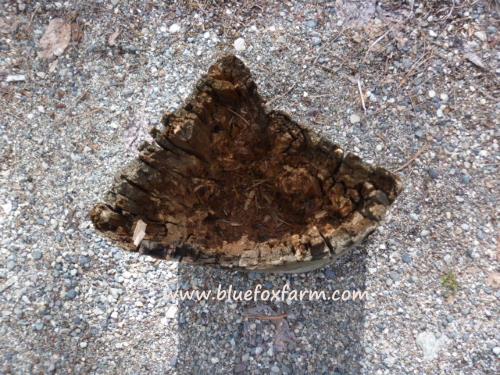
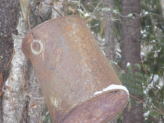
I turn these into fencepost planters. Cut at about 30cm (1') from the top. Make sure you keep the shallow depression where it's rotted out to plant into.
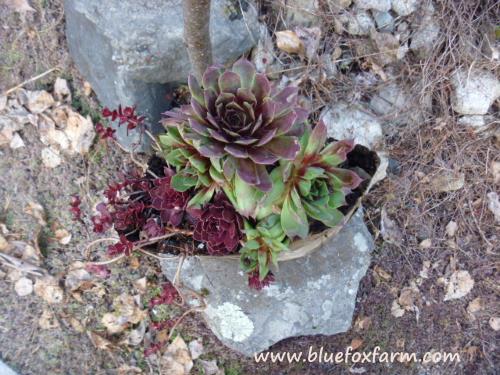
They are big enough for a few Sedum and Sempervivum, who relish the dry conditions.
A fencepost planter filled with Sempervivum trailing over the sides will be gorgeous even though it's more ephemeral than permanent.
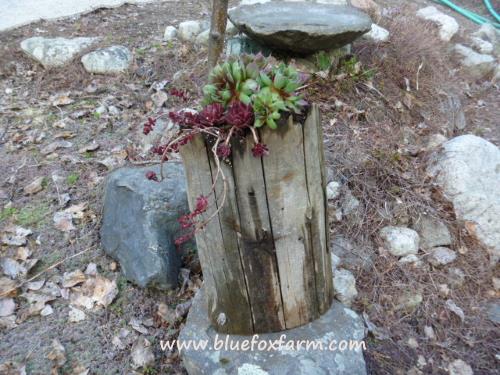
This old fencepost planter still has the marks where the barbed wire was attached, giving it an authenticity that is impossible to fake.
Knots, scars and weathering all add to the patina. In a rustic garden, these unique fencepost planters will be a focal point
Cluster them together in a group with other rustic containers such as driftwood planters, and hypertufa containers like pinch pots. Surround them with interesting rocks collected at the beach.
You might like these
Garden Crafts - embellish your garden with whimsy, charm & character
Garden Crafts made from trash recycled into treasure, thrift store finds and rustic art embellish your rustic garden with whimsy, charm and character
Rustic Bench - how to build your perfect twig and barnboard seat
A Rustic Bench in just the right spot will be a regular stopping point in your garden; enjoy the songs of birds, buzzing bees and flitting butterflies from your twig and barnboard seat...
Rustic Garden Sheds - from the funky to the sublime
Rustic Garden Sheds are the perfect accessory to your garden; not only a functional place to keep your tools, but a well appointed sanctuary for the gardener...
 Jacki Cammidge
AUTHOR BIO
Jacki Cammidge is a Certified Horticulturist with a diploma in Ornamental Horticulture and the rustic garden artisan behind Woman of Many Sticks. Over 30+ years, she built custom twig trellises, archways, clematis gazebos, and 100+ hypertufa pieces using natural materials and upcycled finds. See her work on Facebook and Pinterest. Now retired, she still loves growing and harvesting willow.
If you're curious how broken pots, twigs and wire combine into magic, let's explore creativity in action.
Fill in the form below for your copy;
(Don't be disappointed - use an email address that will accept the free download - some .aol email addresses won't.
If you don't see your download within a few minutes, try again with another email address - sorry for the bother.)




Popular Posts You Can't Miss


Woman of Many Sticks - find out why I'm called that...
Join my e-mail group;
Sign up for the Rurality Newsletter here: (click on the bucket!)
Blue Fox Farm Home | About Me | Contact Me | Site Map | Privacy Policy | Copyright
Copyright © 2002- BlueFoxFarm.com All rights reserved


We acknowledge the traditional owners and custodians of the lands on which we live and work and pay our respects to elders past, present and future. Our business is created on the Mi’kmaq lands we call Epekwitk.